
E-bikes are now a familiar part of cycling, but the growing choice can make it harder to see what matters. Drawing on conversations in the shop, we’ve put together five common misconceptions that can affect how happy you are with your purchase.

Choosing the right e-bike means looking beyond catalogue figures to how it will work on your rides.
Misconception 01 · Range
“The quoted range is what I’ll normally get”
Quoted range often comes from ideal conditions: a lighter rider, flat ground, low assistance, no wind and a comfortable temperature. Consumption might then be around 4–5 Wh/km. In everyday use, most riders are more likely to see 6–14 Wh/km. In our experience, actual range is often around 70–75% of the published figure.
Even two riders of the same weight on identical bikes and batteries won’t necessarily travel the same distance. Riding style, gear choice, cadence and reliance on the motor all matter. Smooth riding and sensible shifting use energy more efficiently than pushing a heavy gear and leaving most of the work to the motor.
Takeaway: a quoted 150 km can become a third less on a real ride without anything being wrong. Range isn’t fixed; it depends on conditions and how you use the assistance.
Misconception 02 · Motor
“I need the strongest motor”
Torque in Nm is often treated as the main measure of performance. But the headline figure describes only peak torque under particular operating conditions. It doesn’t tell you how the motor responds, how smoothly it delivers assistance or how it handles sustained load.
Sensor type and sensitivity, controller tuning, software, power delivery and assistance at low cadence all influence the ride. Two motors rated at, say, 80 Nm can feel very different. One may start smoothly and deliver assistance naturally; another may feel abrupt and use more energy. A stronger motor helps in mountainous terrain, but on flat ground using its extra assistance may simply consume more battery without much benefit.
Takeaway: a bigger number doesn’t guarantee a better ride. Tuning and power delivery matter: the motor should work with your pedalling rather than overwhelm it.
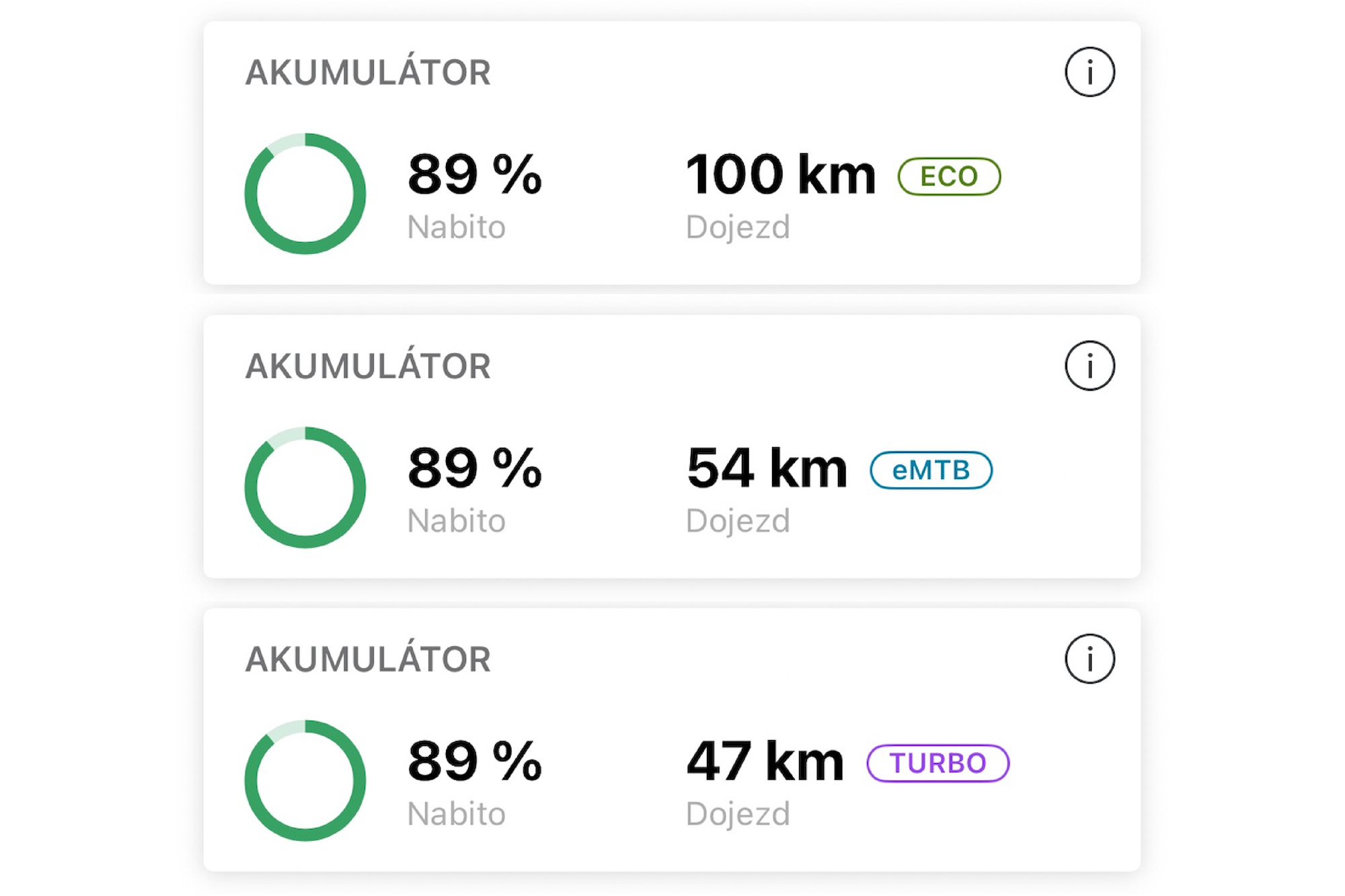
Different assistance modes can change range by tens of kilometres from the same battery charge.
Misconception 03 · Battery
“Battery capacity alone determines range”
Capacity is only part of the equation. Range also depends on motor efficiency, bike design, software, total weight and how energy is used. Good drive systems can limit heat build-up, cool effectively, control assistance precisely and transfer power efficiently.
Two e-bikes with the same capacity and similar motor output can therefore differ in range by tens of kilometres. The more efficient system makes better use of its energy and maintains steady assistance on long climbs. Total bike weight also matters: a larger battery adds capacity, but also weight to accelerate and carry uphill. We discuss battery energy density alongside capacity in our article on lightweight e-bikes.
Takeaway: range comes from the whole drive system working well together, not simply from a big battery.
Misconception 04 · Specifications
“Same motor, same battery: they’re the same e-bike”
People often compare bikes using just a few specifications: motor, battery capacity, brand, fork or price. Yet two e-bikes can have the same motor and battery capacity while differing in battery manufacturer, cells, age and weight. Brakes, shifting, frame, geometry and overall build quality can differ too.
These details affect comfort, reliability, efficiency and service life. Something that seems insignificant in a table can make a noticeable difference on a ride.
Takeaway: comparing numbers takes a minute, but you only discover the difference in handling and ride feel by trying the bikes. Compare them in person as well as on paper.

E-bikes with the same motor and battery capacity can feel very different: details count.
Misconception 05 · Appearance
“It just needs to look good”
Design and colour matter; you should like your bike. Problems arise when appearance or brand becomes the only criterion. Even a bike that looks fantastic can lose its appeal if it doesn’t suit your size, riding style or intended use. No brand leads every category. Each has strengths and weaknesses, and another manufacturer may offer a better balance of price, equipment and handling for your needs.
Takeaway: looks and brand deserve a place in your decision, but shouldn’t make it alone. You can find a bike that looks great and fits you well.
Making your choice
Choosing an e-bike needn’t be complicated, but it deserves a little time. Behind the catalogue figures, logo and colour are differences best understood on a ride. There’s no universally best brand or perfect bike for everyone. The ideal e-bike is the one that suits you: your pace, terrain, riding style and idea of comfort. Let common sense and how the bike feels guide your decision, rather than advertising or online discussions.
From the shop floor
Our job is to talk through the options, explain the differences and help you find a suitable bike. We won’t steer you towards the first model you mention or the most expensive one. Sometimes a small change in expectations leads to a much better fit than you originally imagined. We want you to enjoy riding and have a bike that serves you well for years.
Choosing an e-bike?
Come and compare the models in person. We’ll discuss your rides, terrain and budget, and you can experience how the bikes actually feel.