
The difference between e-bikes is quickly apparent: one feels lively and intuitive, another heavy and cumbersome. Geometry, components, motor tuning and weight distribution all affect ride feel. Weight remains one of the key specifications that bike, motor and battery manufacturers are working on. And the biggest differences often lie in the motor and battery rather than the frame.
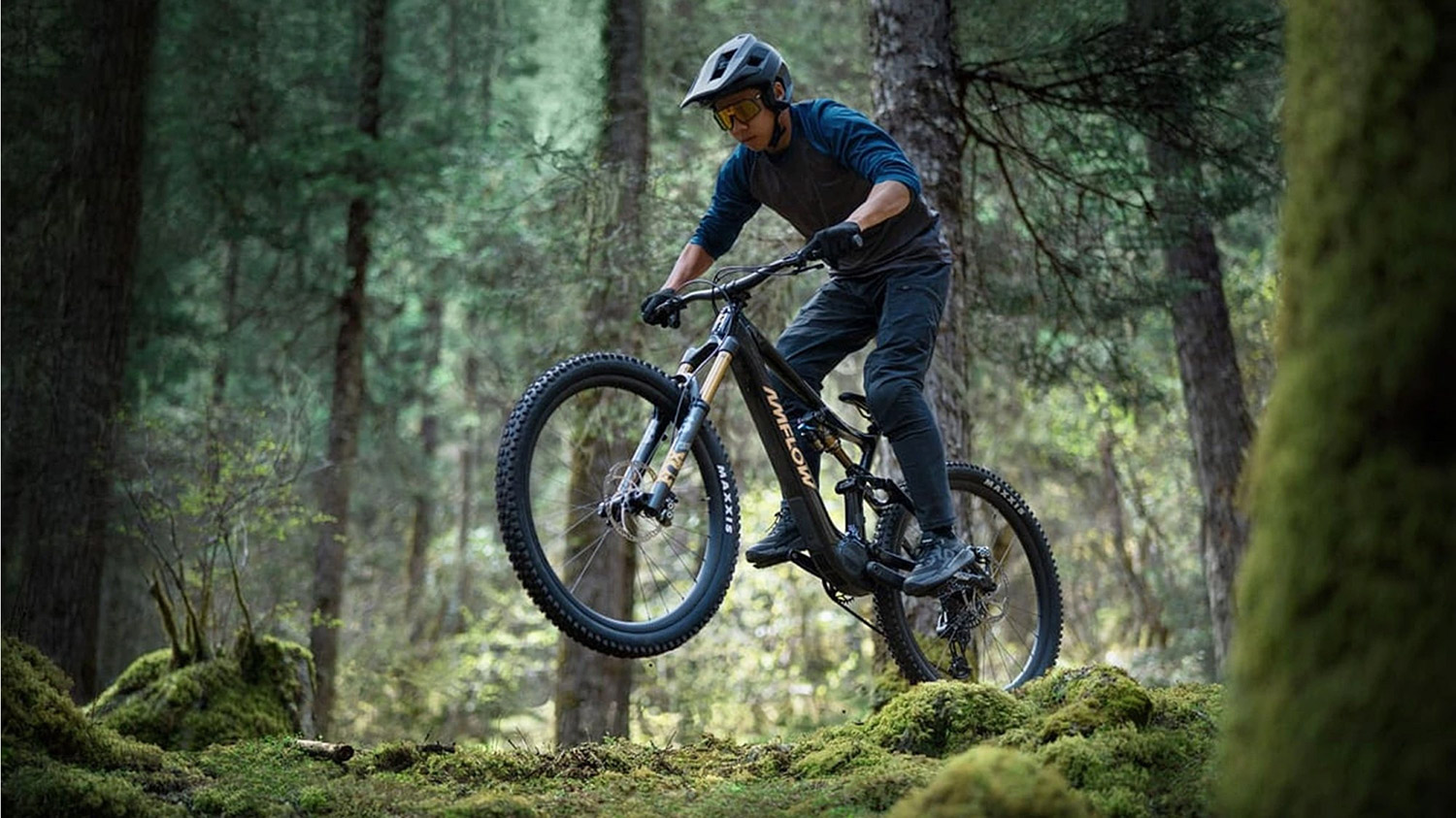
A lightweight e-bike no longer has to mean giving up range or power.
Myth one
A carbon frame means a lightweight e-bike
When trying to save weight, a carbon frame is often the first thing people consider. Yet the frame makes up only a relatively small share of an e-bike’s total weight, so even top-quality carbon cannot work miracles on its own. The motor and battery together typically weigh 6–9 kg. That is where much of the potential for a lighter e-bike lies.
Carbon also adds substantially to the price. Either the whole bike costs more, or savings elsewhere keep the price attractive. Those other components can add weight back and affect reliability and performance. And not all carbon is equal: cheaper versions may be neither as light nor as well made as the material’s name suggests.
Myth two
The bigger the battery, the better
Customers often focus on getting the largest possible capacity. But a bigger battery adds weight, and not everyone needs it. If you don’t use that capacity, you’re carrying extra kilograms for little benefit. The differences are significant: a Bosch PowerTube 600 Wh weighs 3.0 kg, a Bosch PowerPack 400 Wh weighs 2.7 kg, while conventional 900 Wh batteries can weigh 4.5–5 kg.
Look at battery energy density too: how much energy you get per kilogram. Relatively few manufacturers have passed 200 Wh/kg, and this is an important area of progress. Greater energy density allows lower weight without sacrificing range.
205 Wh/kg
Bosch PowerTube 800 – among the pioneers a year earlier
220 Wh/kg
DJI Avinox (FP700) – a newcomer advancing the technology
up to 257 Wh/kg
Kellys AMXXPRO – the highest stated figure in this comparison

Comparing battery energy density: Bosch, DJI and Kellys.
The other half of the equation
The motor: another major source of weight
Established mid-range motors such as the Bafang M510 at 3.6 kg and Panasonic GW Ultimate at 2.95 kg are proven and affordable, but relatively average in weight. They can make for a reliable, enjoyable bike, without delivering record-low weight.
Bosch took a different approach with the Performance SX. At just 2 kg, paired with a smaller battery it helps keep complete bikes below 20 kg, often around 17 kg. The trade-off is lower torque and less battery capacity. It suits riders who prioritise low weight over full power.

Comparing drive system weight: Bosch, DJI, Kellys and Specialized.
A significant step forward comes from systems offering full power and low weight together. Here are two examples.
Leading systems · 01
DJI Avinox: a newcomer raising the bar
DJI showed that a newcomer can move the whole segment forwards. The Avinox M2S motor weighs 2.59 kg while delivering performance that ranks among the best of today’s e-bike drives. It combines compact dimensions and quiet running with multiple sensors, assistance modes and detailed adjustment through an app. Battery energy density reaches 220 Wh/kg, illustrating what is possible for lightweight, full-power e-bikes.

DJI Avinox motor: compact dimensions, quiet running and app-based adjustment.
Leading systems · 02
Kellys AMXXPRO: a lightweight full-power system
Developed jointly by Kellys and Panasonic, AMXXPRO uses the Panasonic GXM AMXXPRO motor. It delivers 105 Nm of torque and weighs just 2.56 kg thanks to magnesium construction, combining strong assistance with very low weight. Its batteries use full-carbon casings: the 820 Wh version weighs 3.48 kg and the 900 Wh version 3.50 kg. Motor and battery together come in at around 6.1 kg.
Worth a closer look
An AMXXPRO-equipped e-bike can therefore be lighter than considerably more expensive carbon models, while remaining surprisingly affordable.
Where the weight sits matters too
Motor and battery placement strongly affect handling. A rear hub motor and rack-mounted battery move weight towards the back wheel, potentially making the bike feel heavier and more cumbersome even if the scales show the same figure. A mid-drive motor and in-frame battery keep the centre of gravity low and central, supporting more natural handling.
What to look for when choosing
Alongside frame material, compare motor and battery weight, energy density and component quality, including the shifters and rear derailleur. Choose battery capacity around the riding you actually do, rather than the biggest catalogue number. For full power and low weight together, look closely at newer drive systems.
These new systems are already in stock
You can see and try e-bikes with Kellys AMXXPRO, Panasonic GXM and DJI Avinox drives at our shop. We can provide complete technical details for each model.
Higher battery energy density, lighter motors and thoughtful engineering are making e-bikes lighter, more agile and more natural to ride. The feel is moving closer to a conventional bike, with modern technology adding assistance whenever you need it.