
A few years ago, visor helmets felt like a specialist choice: something for skiers who wore prescription glasses, or anyone wanting simpler equipment without separate straps, compatibility checks and fogging worries. Today, they’re a mainstream option for skiers who previously wore a conventional helmet and goggles.
A visor helmet won’t improve your technique or make you faster. Its appeal is mainly comfort and having fewer things to adjust throughout the day. The differences are most noticeable in wind and snow, during frequent stops, and whenever you’d rather have one integrated piece of equipment on your head.
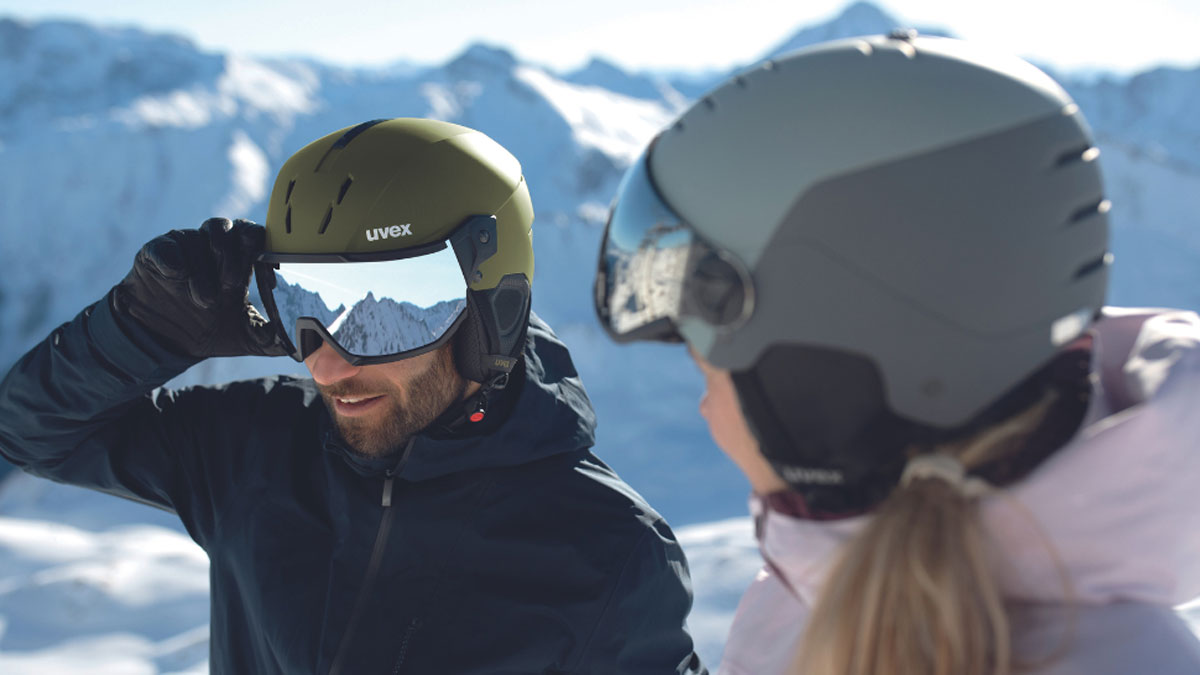
Visor helmet versus helmet and goggles: what changes?
With a visor helmet, head and eye protection form a single unit. The visor stays in place, and there’s no need to check whether the goggles fit the helmet, leave a gap or have a strap that slips. The result is less adjustment and more attention on skiing.
A separate helmet and goggles remain a tried-and-tested standard. Choose them well and they can work comfortably all day. Goggles also make lens changes straightforward and often feel more snugly secured around the face during performance skiing.
You can achieve a similarly integrated feel with separate equipment if you choose the helmet and goggles together, matching their shapes and heights. In practice, though, we often combine what we already own, what’s in stock or what catches our eye. The fit between the two isn’t always ideal.
Visor fit and draughts: the most common concern
This was one of our first questions during testing. We tried the Uvex Instinct Visor PRO V and R2 Panther, both with a photochromic visor, aiming for maximum convenience as the light changed. At higher speeds, around 50–60 km/h, air could get under the visor if the helmet wasn’t positioned correctly. The issue was where it sat on the head: too far back, and the visor didn’t seal properly against the cheeks, allowing a draught inside.
Adjusting the position made a substantial improvement, including at higher speeds. At extremely high speeds, your eyes may still water slightly as airflow and ventilation become more pronounced; conventional goggles also have their limits. For everyday skiing, the key finding was that a correctly positioned visor sat closely against the face and kept the wind out of our eyes.
A practical fitting tip
This simple routine is particularly useful when first putting the helmet on each day: leave the adjustment dial slightly loose, close the visor and check that it sits comfortably against your face. Then tighten the dial to secure the helmet in that position. If it sits too far back, the visor may not meet your cheeks properly and an uncomfortable draught can develop.
Once you’ve found the right position, you usually won’t need to work it out afresh: the correct fit quickly becomes familiar. Separate goggles are often more forgiving in this respect. Helmet position always matters, though, for safety as well as comfort.
Comfort in wind, snow and rain
A visor helmet can be particularly comfortable in windy weather, snowfall and rain. Its integrated construction is most noticeable in the protection from airflow and the compact, all-in-one feel while skiing.
Cleaning is one trade-off. Goggles are easy to remove, and their inner surface is more accessible on the slopes. Access to the inside of a visor is more restricted. Basic cleaning is possible, but a thorough clean is easier away from the piste. You can remove the visor, although most skiers won’t want to do that in the middle of a ski day.
Wet snow and heavy rain bring another consideration. Raising and then lowering the visor can let moisture or water from the helmet’s surface get underneath, where it is harder to deal with. Limiting how often you raise it helps, but that is an inconvenience compared with separate goggles that’s worth bearing in mind.
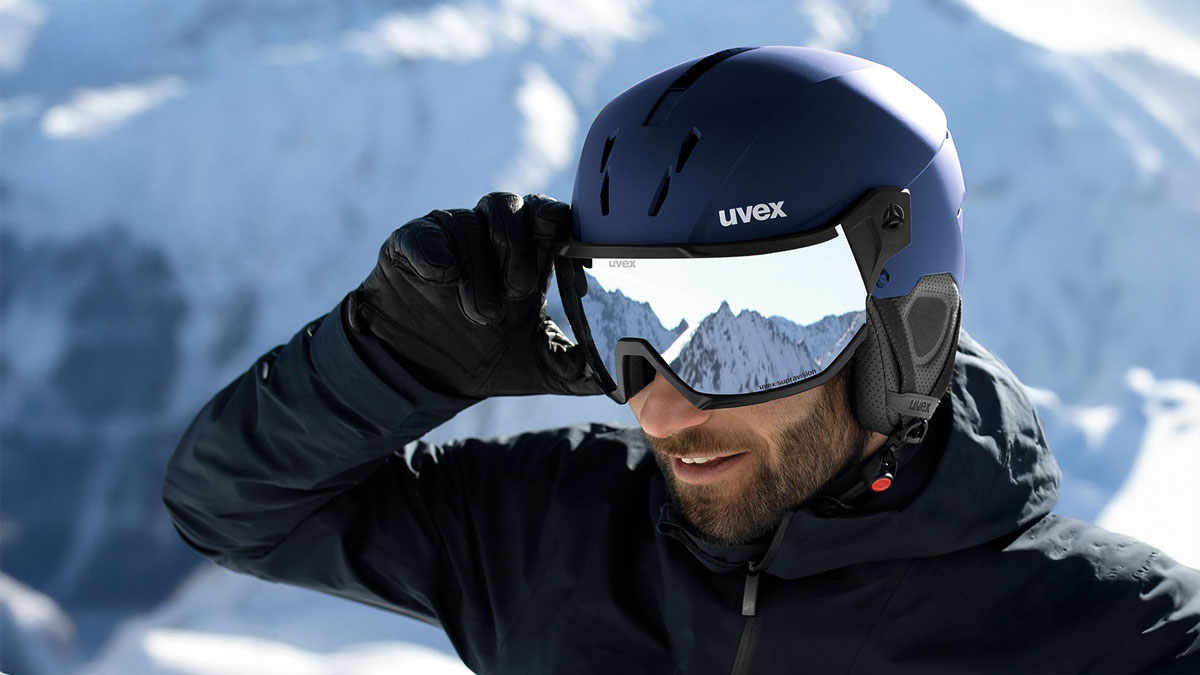 Helmet position and the visor’s contact with your cheeks are crucial to a good fit.
Photochromic visors: adapting to changing light
A photochromic lens comes into its own when conditions change during the day. It darkens in sunshine and lightens as visibility deteriorates, reducing the need to choose between a low-light lens and a sun lens.
We also used the photochromic visor for evening skiing, with no visibility problems. That ongoing adjustment is a major advantage: as the light fades, you don’t immediately have to worry about an overly dark lens.
Photochromic visors do differ in their tint ranges and how they respond, so not every model will behave the same way.
Price: compare the complete setup
A visor helmet’s price can stand out because the cost appears on a single product. But comparing it with a helmet alone isn’t a fair comparison. Compare a visor helmet with a helmet and goggles of a similar standard.
A good helmet plus good goggles often costs a similar amount to a good visor helmet. Buying separately can even cost more, as you’re purchasing two items.
Who are visor helmets best for, and who is better off with goggles?
We’d particularly recommend a visor helmet to skiers who value comfort, simplicity and minimal fuss. Put it on and go, without matching goggles to the helmet or adjusting straps. It’s also practical for skiers wearing prescription glasses, which fit comfortably beneath most current visors. Once correctly positioned, the helmet works as one unit and generally needs little adjustment during the day.
A helmet and separate goggles are a strong option for skiers who favour high-performance skiing or prefer not to fine-tune a visor’s contact with the face. This combination is often more forgiving of small differences in helmet position. Goggles also offer more freedom in style and lens choice, and their inner surface is usually easier to clean.
Visor helmets have clear benefits, but they don’t fit everyone equally well. If you change lenses frequently, enjoy mixing different equipment or don’t want to monitor the visor seal, a conventional setup gives you more flexibility. Choosing a visor helmet can also take more care for certain face shapes, such as a smaller nose or narrower face. Pay close attention to the specific model, size and visor fit.
In very poor weather, including wet snow and rain, the integrated construction can provide good wind protection. Raising the visor, however, makes it easier for moisture to reach its inner surface, where it is harder to remove. Much depends on habit and how you use it, but it’s useful to know before choosing.
What to take away
A visor helmet isn’t universally better than a helmet and goggles. It is, however, a very practical option that can make everyday skiing noticeably more comfortable, particularly in wind, poor weather or when you want fewer separate pieces of equipment.
Draughts beneath the visor needn’t be an inherent feature of the whole category. They often come down to positioning and choosing the right model. With a close visor fit and a correctly seated helmet, it can work reliably at a brisk skiing pace too.
If your priorities are comfort and versatility, a photochromic visor is a useful detail that can leave you thinking much less about your equipment during the day.
Browse our visor helmets here.
Replacement visors and servicing: damage needn’t mean a new helmet
Manufacturers often offer replacement lenses. If a visor gets scratched or damaged, you can replace it without replacing the whole helmet. Some models can also be used with conventional goggles after removing the visor. That isn’t their primary purpose, but it’s a useful fallback option.