
I tested the Tecnica Mach BOA HV 110 GW during ordinary days on the slopes, comparing it with a similarly rated buckled boot I had used previously. I focused on where the difference actually shows up, and where it doesn’t.
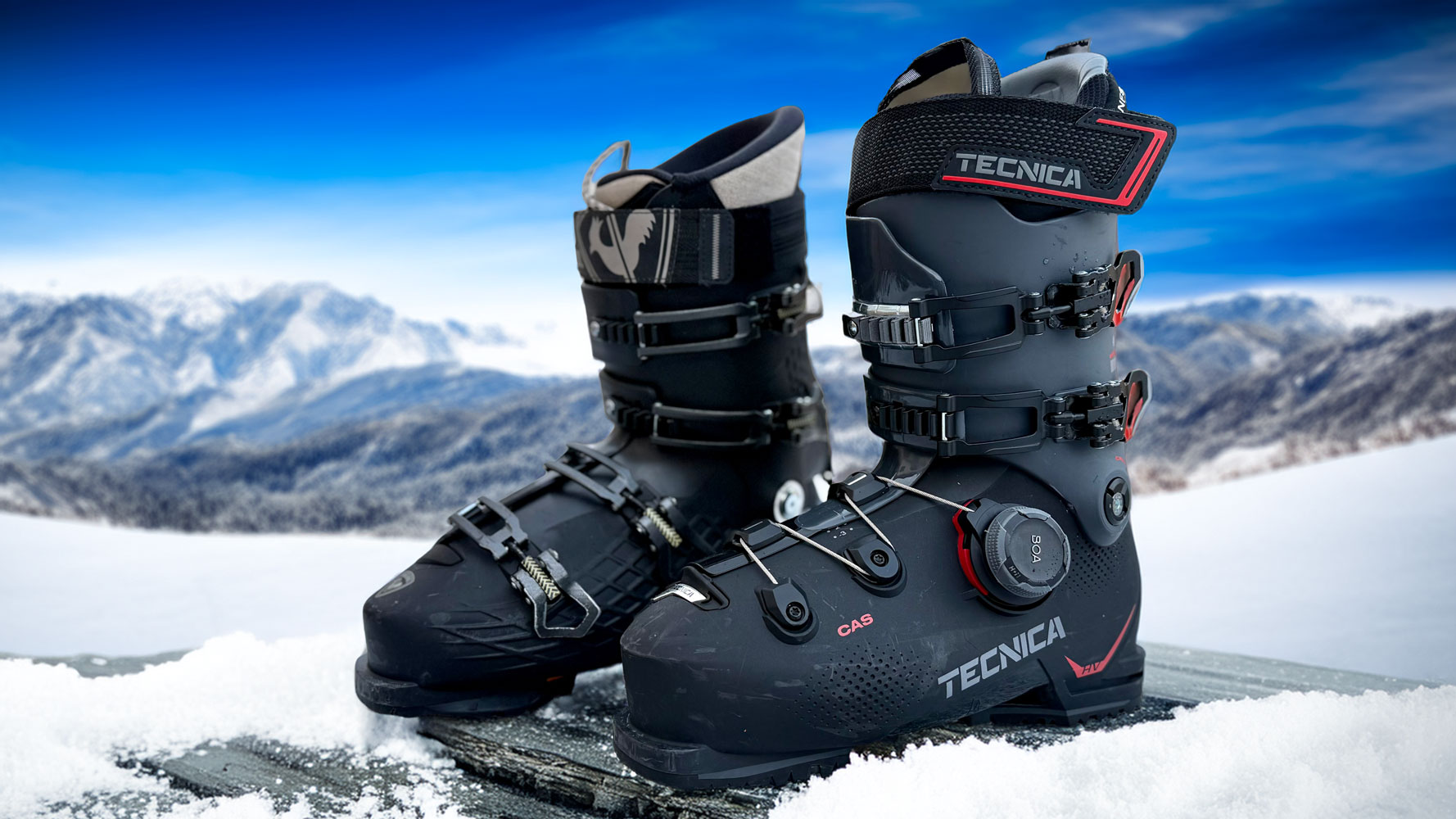
The boots compared in our test: BOA closure and traditional buckles.
Getting into the boots and closing them
Getting into a ski boot depends primarily on the shell construction, cuff shape and entry design. The closure system itself plays little part at this stage: entry is very similar whether the boots use buckles or BOA.
The first difference comes when closing them. With BOA, there’s no need to hook a buckle onto its ladder and find the first notch; you simply turn the dial. It works the same way whether the boot is inherently stiff or has hardened in the cold. Tightening is smooth and requires little force, which is particularly welcome in the morning or after a long break. It seems a small detail, but repeated use makes the extra convenience noticeable.
Tightening: fine adjustments versus buckle notches
As you tighten BOA, you can feel the foot settling naturally back towards the heel. The system offers very fine, incremental adjustment, with much smaller steps than a buckle ladder. That makes it easy to refine the pressure precisely.
Buckles tighten in larger steps between ladder positions. Each step changes the pressure more noticeably and often takes more force. One notch can feel loose, while the next becomes uncomfortable over time. The way pressure is applied also differs: buckles pull the shell together at specific points, while the BOA cable distributes pressure more evenly across the area it tightens. This is about how the boot wraps the foot rather than simply holding it more or less firmly. Over a long day, that can improve comfort and reduce the risk of overtightening one spot.
On the slopes
I noticed no loss of performance. Compared with the similarly rated buckled boot, power transfer and overall stiffness felt comparable. We’ve heard suggestions that BOA boots can feel softer because of differences in construction or materials; that wasn’t my experience here. I should add that I’m not exceptionally sensitive to small differences in stiffness. Once a boot is well chosen and fits properly, I adapt quickly and stop thinking about it while skiing.
Comfort throughout the day
BOA’s main benefit emerged gradually. Fine adjustment across its full range makes it easier to find a setting that is firm enough for skiing without creating pressure. I spent less time loosening, retightening and searching for the compromise familiar from buckles. It also uses one mechanism in place of two separate buckles, so there’s no switching between individual closure points.
The biggest surprise: loosening the boots during the day
My experience
I hadn’t expected this to matter, because I don’t usually bother loosening my boots much during the day. With BOA, I sometimes did so precisely because returning to the previous fit was quick and easy. I found myself releasing them in situations where I wouldn’t have bothered with buckles, such as queuing for a lift or riding a chairlift.
In practice, pulling the dial out releases the boot immediately. The cable stays threaded, and a few turns tighten it again. You can loosen buckles too, but it’s less convenient. If you unhook them completely, closing them against a cold, stiff shell usually takes more effort. Even leaving them open but hooked onto the ladder makes returning to the original tension harder work than with BOA.
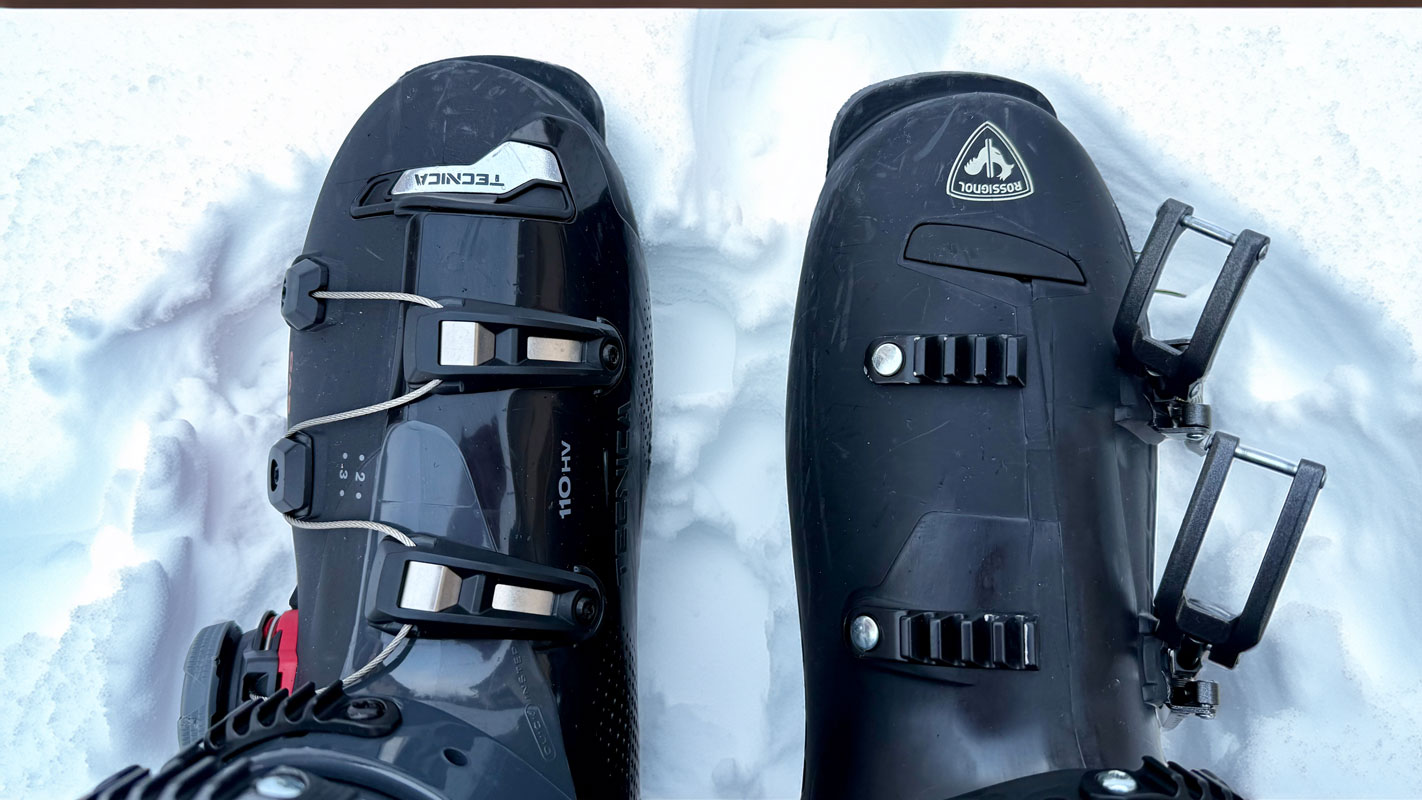
BOA released: the cable stays threaded and a few turns tighten it again.
Durability and service life
Both buckles and BOA can be damaged. A fall onto a rock or a hard impact can affect either system, and individual parts can be replaced on both. The dial may stand out more on the boot, but doesn’t get in the way during normal use. Experience with BOA on other equipment also points to a long service life for the dial and cable. They often work reliably for the product’s entire life and may even outlast the boot itself.
One detail to check: distinguish genuine BOA from other dial-based systems. Not all offer the same precision, durability or service options. Most well-known manufacturers use original BOA, but don’t take that for granted.
What the test showed
What BOA changes
Finer, more precise adjustment, more even pressure, better day-long comfort and easier handling between runs. One mechanism lets you release quickly, tighten accurately and return easily to your preferred fit.
What stays the same
In this comparison, skiing performance, power transfer and overall stiffness felt similar. Entry was also much the same: that depends on shell construction rather than the closure system.
These observations won’t apply universally. The exact boot model, shell construction, last and personal preferences all affect the result. This article compares tightening mechanisms, rather than the overall construction of ski boots.
Try both systems in person
The best way to find out what suits you is to try both options side by side. We’ll help you choose ski boots in the shop, including the right size and last shape.
